
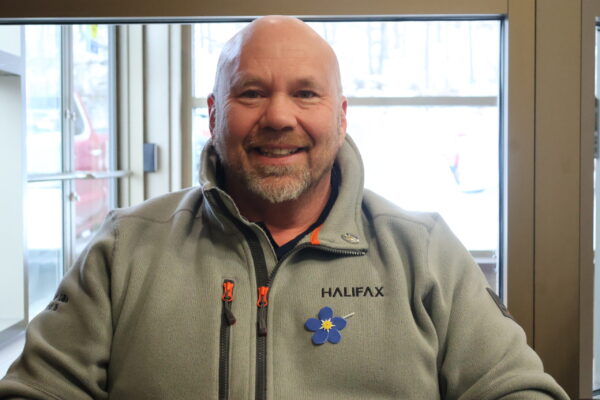
LOWER SACKVILLE: Billy Gillis, the councillor for Lower Sackville-Beaver Bank, said 2025 was a foundational year on regional council, focused on relationship-building, tackling long-standing safety concerns, and laying the groundwork for future improvements across his diverse district.
“You spend a lot of time that first year fostering relationships with different levels of government,” Gillis said, noting the recent election of new MLAs and a new federal MP.
“It’s about developing those relationships to make your community better.”
Among the top priorities Gillis identified was progress on the long-discussed Wingate Drive intersection in Beaver Bank, which he described as one of the most common concerns raised during his campaign.
“That by far was one of the biggest issues I heard about when knocking on doors,” he said. “It’s a very dangerous intersection.
“It’s an oddly shaped one, with multiple landowners and a railway crossing.”
ADVERTISEMENT:
Gillis confirmed the intersection project is now included in the current budget for design work, with hopes construction funding could follow in the 2027–28 capital budget.
“Hopefully we’ll be able to get that intersection fixed, finally, at last,” he said, adding that previous councillors had faced challenges due to land ownership, rail infrastructure, and jurisdictional complexity.
Transit remains another major focus, particularly the return of service to North Beaver Bank.
“I am working on it. I am having productive conversations and making a little bit of headway,” Gillis said, acknowledging that ridership levels and logistical challenges remain obstacles.
As council works through the 2026–27 municipal budget, Gillis said affordability is front of mind for residents.
“Our residents are saying they want to keep their tax bills as low as possible,” he said during a sit down interview at the Beaver Bank Road Tim Hortons in Lower Sackville.
“We have asked staff to present us with a budget that’s as low as we possibly can—bare bones core services.”
Those core services include police, fire, transit, sanitation, and snow clearing. Gillis explained that early budget figures are often high because departments submit full funding requests, leaving council to decide which assets are truly necessary.
“We have to look at these assets and say, ‘Do we actually need them?’” he said.
ADVERTISEMENT:
At the time of the interview, Gillis noted the projected tax increase had moved from an initial estimate of just over 10 per cent to approximately 10.9 per cent, with discussions ongoing until final approval in the spring.
Looking ahead, Gillis said expanding green spaces and improving active transportation links across Sackville and Beaver Bank remain key goals.
“That’s one of the things I ran on. That’s one of the things that the community needs,” he said, adding that while he couldn’t share details yet, “there are productive discussions along the way.”
He also wants to see better connections between existing and planned multi-use trails.
“What I’d like to do is link the Sackville Greenway with the Bedford-Sackville Greenway,” Gillis said, noting future connections could eventually tie into Lucasville.
“I want all these connected so we can have a complete active transportation link between all the communities, safely, off the main roads.”
Gillis acknowledged the challenges of representing a district that includes urban Lower Sackville, suburban Beaver Bank, and rural North Beaver Bank.
“Everybody’s needs are a little different,” he said. “The services that are out there are not necessarily the services here because of more people.”
For 2026 and beyond, Gillis said transit reform will demand much of his attention, including reliability, coverage, and faster connections to downtown Halifax.
“The ultimate goal is to get people out of their cars,” he said. “Halifax is a very car-centric city, and that’s only because we don’t have options.”
Among the ideas he has discussed with transit officials are regional express routes, micro-transit options, and better links between Beaver Bank, Fall River, and Windsor Junction.
“I would love to have a link to Fall River that just goes back and forth all day,” Gillis said. “Bring people from Fall River to the Sackville terminal, then into town.”
ADVERTISEMENT:
On the recreation front, Gillis highlighted a major renovation planned for the Sackville Sports Stadium, estimated at $30 million.
“It’s going to redo the pool deck, all the change rooms, add a walking track, a gym, and fix the parking lot,” he said, along with plans for a common entrance and a public boat launch.
Construction is expected to begin in 2027–28, with full implementation by 2029–30.
Ultimately, Gillis said affordability remains the most consistent concern he hears from residents.
“People are strapped,” he said, pointing to rising costs from utilities, assessments, and taxes. “They are asking us to keep their tax bills as low as possible, and I’m going to do whatever I can to keep those bills affordable.”
He added that regular meetings with provincial and federal representatives MLA POaul Wozney and MP Braedon Clark have helped align priorities and improve coordination.
“We lean on each other depending on what the issue is,” Gillis said.
“It’s about working together for the betterment of the community.”