
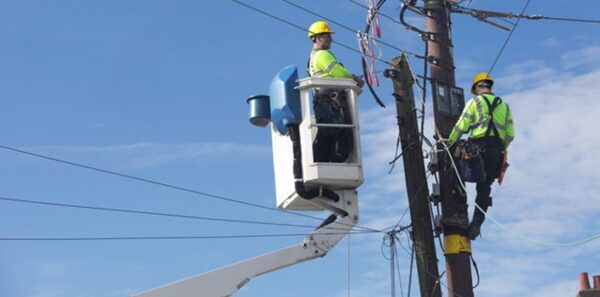
LOWER SACKVILLE: Two separate power outages in Lower Sackville this week left thousands of customers temporarily without electricity.
According to Nova Scotia Power spokesperson Jackie Foster, the first outage occurred Sunday night Feb. 15 shortly after 9:30 p.m.
It was caused by a raccoon that crawled onto equipment inside a local substation. Approximately 6,700 customers were affected. Power was restored around 1:30 a.m.
A second outage took place early Tuesday morning, Feb. 17, beginning around 12:30 a.m.
Foster said a short piece of joining line on a power pole along Walker Avenue failed and had to be replaced. Roughly 600 customers were impacted during that interruption.
ADVERTISEMENT:
Foster noted there have been several recent outages in the Lower Sackville area. One was related to a tree coming into contact with a power line, while others were caused by damaged equipment that has since been replaced.
“We understand how inconvenient and frustrating outages can be,” Foster said, adding that crews inspect power lines every two years as part of an ongoing maintenance program.
She explained that when outages occur, crews work to identify the cause and restore power as quickly as possible.
After service is restored, it is common for a line inspector to complete an additional inspection to ensure everything is operating properly and no further issues remain.
ADVERTISEMENT:
Nova Scotia Power is currently in the midst of its five-year reliability plan (2025–2029), which will see a $1.3-billion investment aimed at strengthening and improving the province’s electricity grid.
The plan includes an average of $250 million in projects annually across Nova Scotia.
The utility’s three main areas of focus include modernizing the grid with improved monitoring and control systems to detect and restore outages faster; storm-hardening the system through upgrades to lines, poles and transformers; and expanding vegetation management.
Foster said tree trimming investments have more than doubled over the past three years, increasing from $20 million annually to $45 million per year.
“Trees and branches coming into contact with power lines is one of the top reasons for outages,” she said.